In custom metal fabrication, some parts can be cut, formed, and welded into place. Others need machining to reach the tolerances, geometry, and surface finish the job requires. That is where lathe work and milling come in.
Both processes support precision, but they solve different machining problems. The right process depends on the shape of the part, the material, and how that component needs to perform once it is in service.
Where Turned Parts Matter
Lathe work is built around cylindrical parts. Shafts, bushings, spacers, sleeves, and similar components are strong candidates because the process supports rotational accuracy and repeatable turned features.
That makes lathe work a practical fit when the part requires:
- accurate outside diameters
- precise internal bores
- threads, tapers, or shoulders
- consistent turned features across multiple parts
In industrial applications, those details matter because round components often have to fit cleanly into a larger assembly without added adjustment in the field.
Matching Turning Capacity to the Part
Not every turned part places the same demands on the machine. Some jobs call for small, high-precision components with tight tolerances and a clean surface finish. Others require larger diameters, heavier material, or deeper cuts.
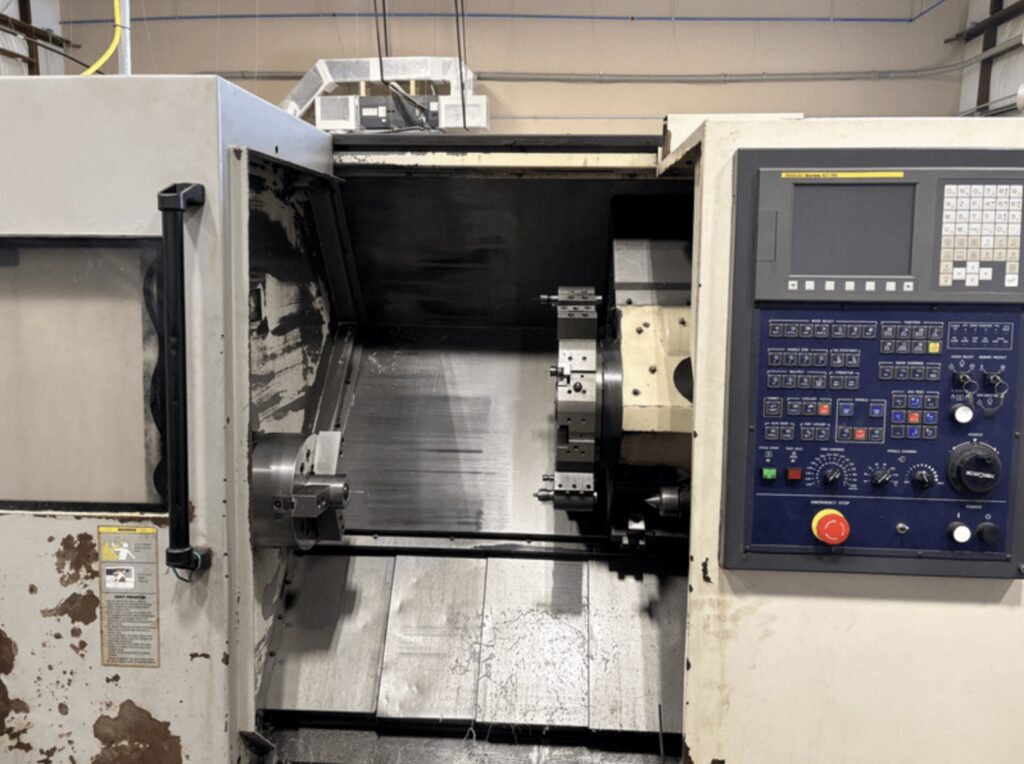
That is where machine range becomes important. JAG Professional Services supports both ends of that work through Swiss-type CNC turning for small precision parts and larger CNC lathe capacity for heavier turned components. That gives the shop more flexibility to match the process to the part instead of forcing different work through the same setup.
Milling for Features a Lathe Cannot Produce
Where lathe work handles round geometry, milling is used for parts with flat surfaces, pockets, slots, drilled features, and more complex prismatic shapes. Brackets, plates, housings, bases, and support components often fall into this category because they need more than turned features alone.
Milling is often the better fit when the part requires:
- machined faces and flat surfaces
- drilled and tapped holes
- pockets, cutouts, or contours
- multiple machined features across different sides of the part
For many industrial applications, that makes milling essential for components that need to align, mount, or perform within a larger fabricated system.
Supporting Both Short Runs and Repeat Work
Milling also gives a shop flexibility across different production needs. Some jobs require quick setups for prototypes or replacement parts. Others move into repeat production, where toolpaths, dimensional consistency, and surface finish all need to hold from one part to the next.
JAG Professional Services supports 3- and 4-axis CNC milling for both prototypes and production quantities, which helps keep machining aligned with the actual scope of the job rather than treating every part the same way.
Setup, Material, and Tolerance Still Matter
Good machining is not only about the equipment. It depends on setup, tooling, material behavior, tolerance requirements, and how the finished component will be used. That becomes even more important when the work involves a wider range of materials such as steel, stainless, aluminum, titanium, and engineered plastics.
For industrial teams, that matters because machined parts often support alignment, fastening, motion, or load within a larger assembly. If those details are off, the effect is usually bigger than the part itself.
Why In-House Machining Capability Matters
Lathe work and milling handle different machining needs, but both help produce parts that match the job. Some components can be completed entirely on a lathe, while others require milling or a combination of both.
That is why in-house machining capability matters. JAG Professional Services supports both lathe and milling work as part of its broader custom metal fabrication capabilities, helping industrial teams produce machined components that fit the demands of the application.
Need machined parts for an industrial fabrication project?
Request a quote or schedule a consultation with JAG Professional Services.