Choosing between metal fabrication companies involves more than comparing quotes or confirming that each shop offers welding and cutting. For industrial work, the fabricator also needs to understand the materials, tolerances, processes, interfaces, and downstream requirements that determine whether a finished component will perform as intended.
A useful comparison starts with the requirements of the project itself. The following five areas can help plant managers, engineers, procurement teams, and project managers evaluate whether a fabrication company is equipped for the work being considered.
1. Relevant Industrial Experience
A fabricator may produce quality work and still be a poor match for a particular project. Industrial components and assemblies can involve requirements that differ substantially from architectural, residential, or decorative metalwork.
Review completed work that reflects the type of fabrication being sourced. Similarities in material, component size, geometry, machining requirements, assembly complexity, or installation conditions can be more informative than a large portfolio of unrelated projects.
For work going into an operating facility, experience with industrial environments is particularly useful because the fabricated component may need to coordinate with existing equipment, structures, utilities, or production requirements.
2. Capabilities That Match the Part
A long equipment list does not automatically make one fabrication company a better choice. What matters is whether its processes are appropriate for the part being produced.
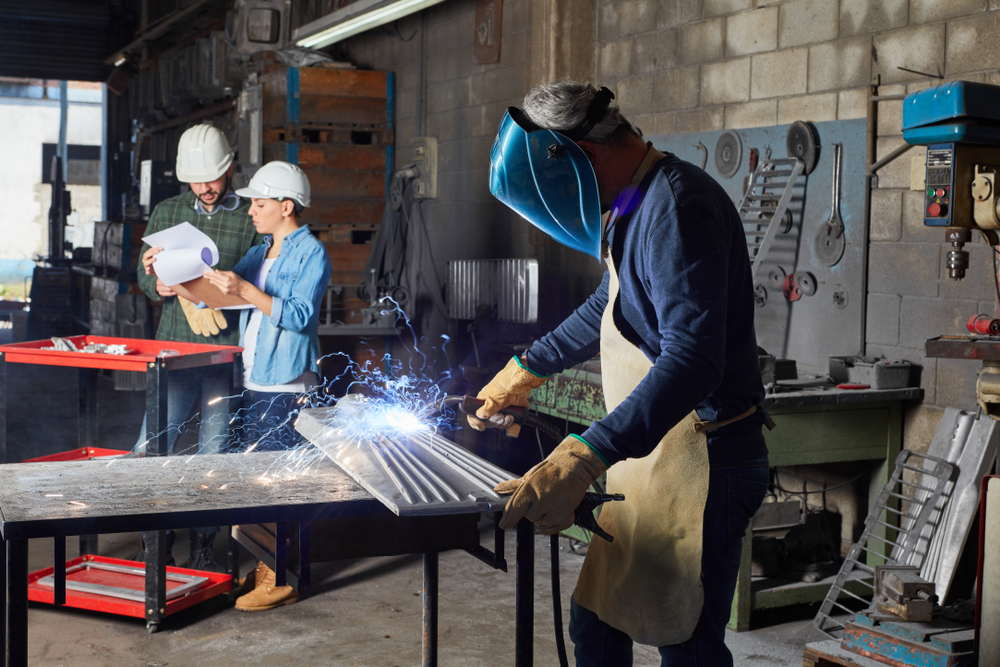
Depending on the project, fabrication may involve a combination of cutting, bending, machining, welding, and assembly. Material is another consideration. Carbon steel, stainless steel, and aluminum behave differently during fabrication, and the appropriate process can vary with thickness, geometry, tolerance requirements, and the intended application.
Before awarding the work, confirm which processes will be used and whether important production steps are performed by the fabricator or coordinated through outside vendors. JAG supports custom fabrication projects through cutting, welding, machining, bending, and assembly, while coordinating metal finishing through a trusted third-party vendor when the project requires it.
3. How Specifications and Quality Requirements Are Managed
Industrial fabrication should begin with a clear understanding of what controls the finished part. Critical dimensions, tolerances, material specifications, weld requirements, fit-up, and inspection needs should be identified before production rather than addressed after a component is complete.
When comparing metal fabrication companies, look at how each one handles the information that defines acceptable work. Useful questions include:
- How are drawings, revisions, and specifications reviewed before fabrication?
- Which dimensions or interfaces are considered critical to fit?
- How are inspection requirements established for the project?
- How are discrepancies or unclear requirements addressed before production?
- What documentation is required with the completed work?
The appropriate level of control will vary by project, but the fabricator should be able to explain how requirements move from the drawing or specification into production and inspection.
4. Capacity, Scheduling, and Project Communication
A fabrication quote should be considered alongside the company’s ability to execute the work within the project schedule. Available equipment, production workload, material availability, outside processing, and the number of fabrication steps can all affect delivery.
For procurement teams, it is useful to understand where schedule risk exists before a purchase order is issued. A realistic production plan is generally more valuable than an aggressive date that does not account for the work required.
Communication is part of that evaluation. Drawing changes, material questions, production issues, and field conditions can require decisions during a project, so responsibilities and points of contact should be clear from the beginning.
5. What Happens After Fabrication
The finished part often has another step ahead of it. It may need to be assembled into a larger system, transported into an operating facility, installed against existing conditions, or integrated with other equipment.
Those downstream requirements can influence decisions made during fabrication. Assembly size, connection locations, dimensional interfaces, access, and installation sequencing may need to be considered before material is cut or welded.
A fabricator that understands where the component is going can evaluate the work in the context of the complete project rather than treating shipment as the only endpoint.
Compare the Complete Fabrication Approach
Price remains an important part of supplier selection, but it should be considered with the technical and operational requirements of the project. Relevant experience, process capability, specification control, scheduling, and downstream coordination all affect the actual value a fabrication company provides.
JAG Custom Fabrication supports industrial projects with cutting, welding, machining, bending, and sub-component fabrication and assembly. For projects that extend into facility construction or installation, JAG Professional Services provides the contracting capabilities needed to coordinate the fabrication with the work taking place in the field.