A guide block that repeatedly marks finished products presents a different material problem from a support carrying a continuous load. Both may be candidates for a material change, but their requirements point toward different properties. Wear behavior could drive the first decision; stiffness and long-term deformation could control the second.
Engineered plastics for industrial components are worth evaluating where a sliding surface needs to limit product marking, a moving component would benefit from lower weight, or an assembly requires electrical isolation. Each application still needs a grade-specific review of loading, wear, and environmental exposure. A material that addresses one requirement may introduce different limits elsewhere in the assembly.
Start With the Contact Surface
For guides, bushings, rollers, and wear pads, the interaction between surfaces can be more useful than a comparison of tensile-strength values. Sliding speed, contact pressure, shaft finish, lubrication, and debris all affect how the component behaves.
A polymer guide may help protect a finished product from marking, but embedded abrasive particles can turn that same guide into a damaging contact surface. A bushing that performs well during intermittent movement may behave differently under continuous rotation as friction generates heat.
Define the actual contact conditions before selecting a grade. Whether the component runs dry, encounters washdown chemicals, or contacts a rough metal surface can narrow the material options more effectively than a general request for a durable plastic.
Sustained Loads Require Long-Term Data
A short-term strength value does not establish how well a plastic component will retain its shape under continuous loading. Polymers can experience creep under sustained stress, with deformation developing over time and becoming more significant under certain temperature conditions.
This is relevant to a spacer compressed beneath a bolted connection or a support pad carrying equipment weight. The component may fit correctly during installation and gradually change thickness or shape, affecting alignment or clamping force.
Evaluate grade-specific creep data at a relevant stress and temperature over the intended service period. For a continuously compressed spacer, the allowable thickness change may control selection before short-term strength does. A metal sleeve or revised load path may be appropriate where the polymer cannot maintain the required clamping relationship.
Operating Conditions Can Change the Clearance
A machined dimension describes the part under its measurement conditions. Temperature changes and moisture absorption can alter polymer dimensions in service, with the amount depending on the specific material and grade.
For a plastic bushing inside a metal housing, the relevant question is how the complete assembly changes as it heats up. Differential expansion can affect running clearance or retention. A close-fitting guide exposed to moisture may also require a different allowance from one used in a dry, temperature-controlled area.
The machining requirements for bores, shoulders, and mating features should reflect those operating conditions. Tightening a manufacturing tolerance cannot compensate for a clearance that was specified without considering the service environment.
Chemical Resistance Needs Specific Conditions
A general description such as chemical-resistant does not establish compatibility with every cleaner, lubricant, or process fluid. Concentration, temperature, exposure duration, and mechanical stress can all change the result.
A component exposed to a diluted cleaner during a short wash cycle faces different conditions from one continuously immersed in a heated solution. Where failure would interrupt production or compromise protection, the review should use grade-specific compatibility information and representative testing when needed.
The same discipline applies to food-contact, flame-performance, or other compliance requirements. Specify the required approval for the exact material grade and application; a broad polymer designation does not establish compliance.
A Material Change May Require a Design Change
Replacing a metal component with plastic using identical geometry can leave the original load and fastening assumptions unexamined. Lower stiffness, localized compression beneath fasteners, and time-dependent deformation may require thicker sections, additional support, or a different attachment method.
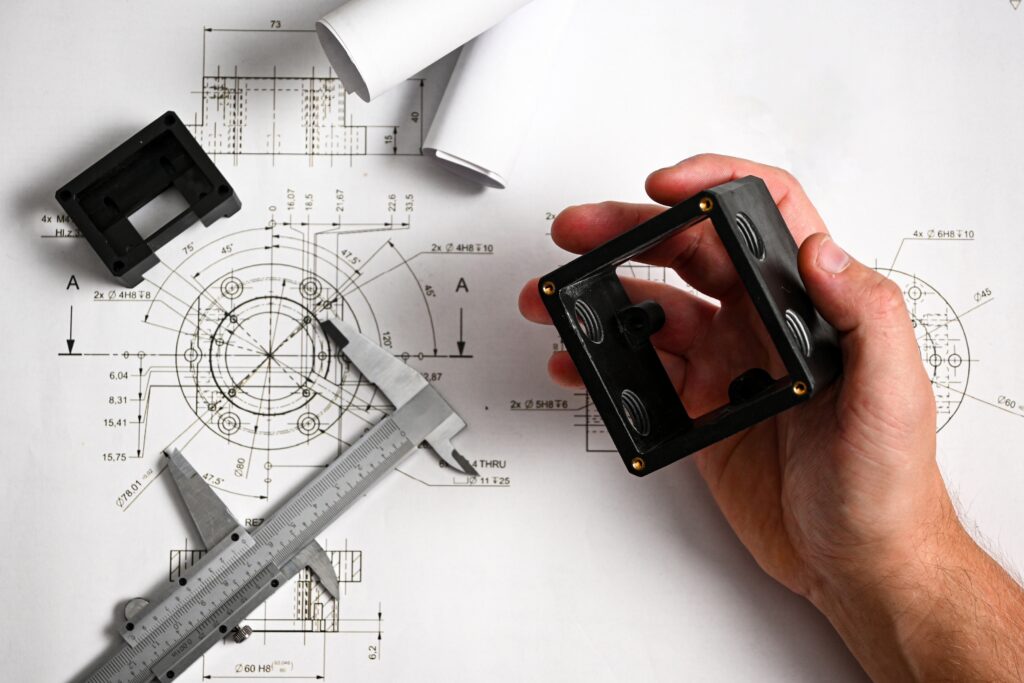
Machining also needs to account for material behavior. Excessive clamping can deform a part during cutting, and a component measured immediately after machining may need to reach a stable temperature before final inspection. These requirements belong in the defined production and inspection scope before pricing and release.
Use the Existing Part to Narrow the Problem
When replacing an existing component, its condition can help identify what the next material or design needs to address. Record where damage appears, when performance changes, and how long the part has been in service before treating the issue as a material failure.
- Wear concentrated on one edge: Check alignment and load distribution. A different material may face the same uneven contact unless the underlying condition is corrected.
- Movement becomes restricted as equipment warms up: Investigate operating clearance, differential expansion, and frictional heat before changing the specified dimensions.
- Damage appears after cleaning cycles: Check the exact material grade against the cleaner’s concentration, temperature, and exposure time.
- Deep scoring along a sliding surface: Inspect for trapped debris and rough mating surfaces. Material selection alone may not resolve the source of abrasion.
These observations guide the investigation; they do not establish the cause by themselves. Use the findings to define what the replacement must withstand and how its performance will be evaluated.
Choosing for the Conditions in Service
An engineered plastic may solve a wear or contact problem yet introduce new requirements for support, fastening, or operating clearance. Evaluating the material and component design together helps determine whether the change will improve performance over the required service life.
JAG Custom Fabrication machines engineered plastics, including nylon and acetal, for industrial applications. Contact our team to discuss your drawing, operating conditions, and machining requirements.