In industrial environments, workspace organization affects more than appearance. It influences material flow, tool access, workstation consistency, and how efficiently work moves across the floor. When the physical setup does not match the demands of the process, small inefficiencies can turn into wasted movement, slower changeovers, and a harder-to-maintain work area.
That is where 5S lean manufacturing fixtures can add value. When fixture systems are built around the way the operation actually runs, they help support a workspace that is easier to manage, easier to sustain, and better aligned with daily production demands.
What 5S Is Designed to Improve
5S originated in Japan as part of the Toyota Production System and remains one of the most widely used Lean tools. Each step is meant to improve how the workspace functions:
- Sort (Seiri): remove unnecessary items to reduce clutter and waste
- Set in Order (Seiton): arrange items for easier access and better workflow
- Shine (Seiso): keep the workspace clean to help detect issues and maintain safety
- Standardize (Seiketsu): create consistent procedures and visual control
- Sustain (Shitsuke): maintain the discipline needed to keep improvements in place
The goal is not simply a cleaner floor. It is a work area that supports better flow, clearer organization, and more consistent day-to-day performance.
Where 4S + S Fits In
In some manufacturing environments, teams refer to 4S + S fixture systems as a way to organize the floor around the same core principles. The terminology may vary, but the objective stays the same: build a workspace that is easier to use, easier to maintain, and easier to keep consistent over time.
Whether the system is called 5S or 4S + S, the physical setup plays a major role in whether those standards hold up under real operating conditions.
Lean Fixtures Help the System Hold Up
One of the biggest challenges with 5S and 4S + S is not getting organized once. It is keeping that structure in place over time. If the workspace does not support the system, teams end up relying on reminders instead of a setup that reinforces the standard naturally.
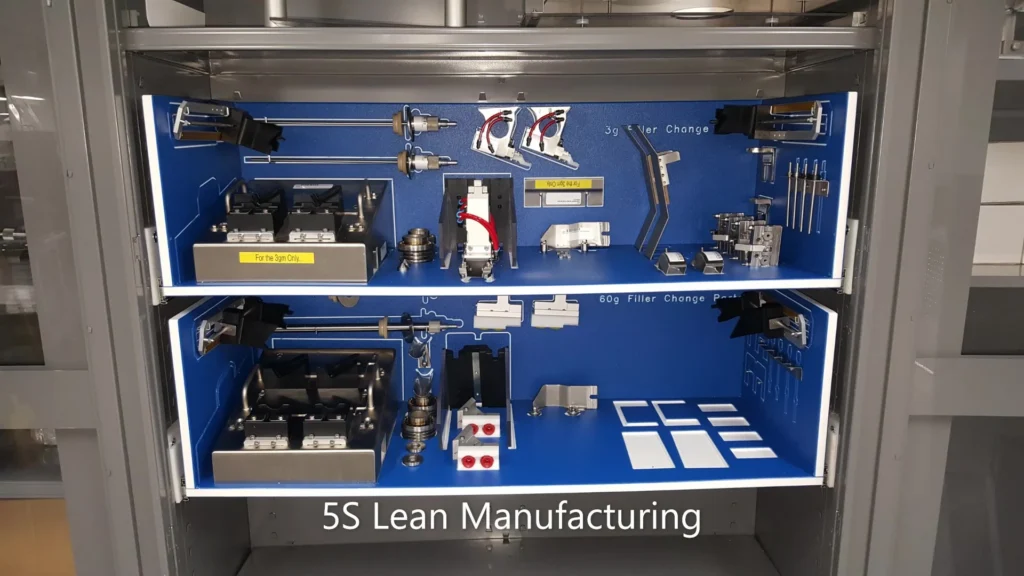
That is why fixture design matters. Workstations, racks, carts, and stock areas need to reflect how materials move, how operators work, and what needs to stay accessible throughout the shift. When those elements are built around real workflow, the floor becomes easier to manage and more consistent from one work area to the next.
That kind of setup can support:
- clearer material staging
- faster access to tools and supplies
- less wasted movement
- stronger consistency across work areas
Built Around the Way the Floor Operates
Lean manufacturing fixtures are most useful when they support the actual conditions on the floor. They are not just about storage or organization on paper. They help create a physical setup that supports process control, repeatability, and day-to-day use.
For manufacturers looking to support 5S lean manufacturing and 4S + S systems with custom-built solutions, JAG Professional Services provides custom metal fabrication designed around workflow, organization, and long-term use in industrial environments.
Need custom fabrication for a lean manufacturing workspace?
Request a quote or schedule a consultation to discuss your fixture, workstation, or organizational requirements.