In custom metal fabrication, cutting does more than shape the part. It affects tolerance, edge quality, material behavior, and how smoothly the work moves into bending, welding, machining, or assembly.
That is why the cutting method matters. Material type, thickness, geometry, and downstream requirements all influence which process makes the most sense. The stronger the match between the method and the job, the easier it is to maintain quality from the start.
Waterjet Cutting
Waterjet cutting is a strong option when heat cannot be part of the process. Because it cuts without creating a heat-affected zone, it works well for materials and applications where distortion, edge condition, or thermal change need to be controlled more closely.
In industrial work, that makes waterjet a practical fit for precision parts and applications where material stability matters.
High-Definition Plasma Cutting
High-definition plasma is often the right fit for thicker material and larger industrial components. It works well on carbon steel, stainless, and aluminum plates where cut quality and production speed both matter.
For supports, structural pieces, and heavier fabricated parts, plasma gives the shop a reliable way to process material efficiently while keeping the job moving.
Fiber Laser Cutting
Fiber laser cutting is often used on thin to medium-gauge material where tighter detail and cleaner edges are important. When part quality affects downstream fit-up, finishing, or assembly, that cleaner cut can reduce extra work later.
For custom metal fabrication, laser cutting is especially useful on parts that need consistency, tighter geometry, and less secondary cleanup before moving to the next stage.
CNC Routing
Not every job centers on thick steel or plate. CNC routing adds flexibility by supporting materials such as plastics, wood, aluminum plate, and composites.
That capability is useful on projects involving panel work, mixed materials, or more specialized components that do not fit the same workflow as heavier metal fabrication.
Shearing
Shearing is one of the most efficient options for straight, clean cuts in sheet and plate. For the right type of work, it supports speed, repeatability, and minimal burr without adding unnecessary complexity to the process.
When the job calls for straight-line production instead of intricate geometry, shearing is often one of the most practical tools in the shop.
Multi-Stack Band Saw Cutting
Band saw cutting is often about keeping material prep efficient. For repeated cuts and stacked material, it helps move work through the shop more efficiently before parts advance into later fabrication stages.
That kind of throughput matters on industrial work, especially when production pace at the front end affects everything that follows.
The Process Should Match the Part
In custom metal fabrication, the cutting method should reflect the demands of the part, not the limitations of the shop. Material, thickness, geometry, tolerance, and production volume all play a role in choosing the right approach.
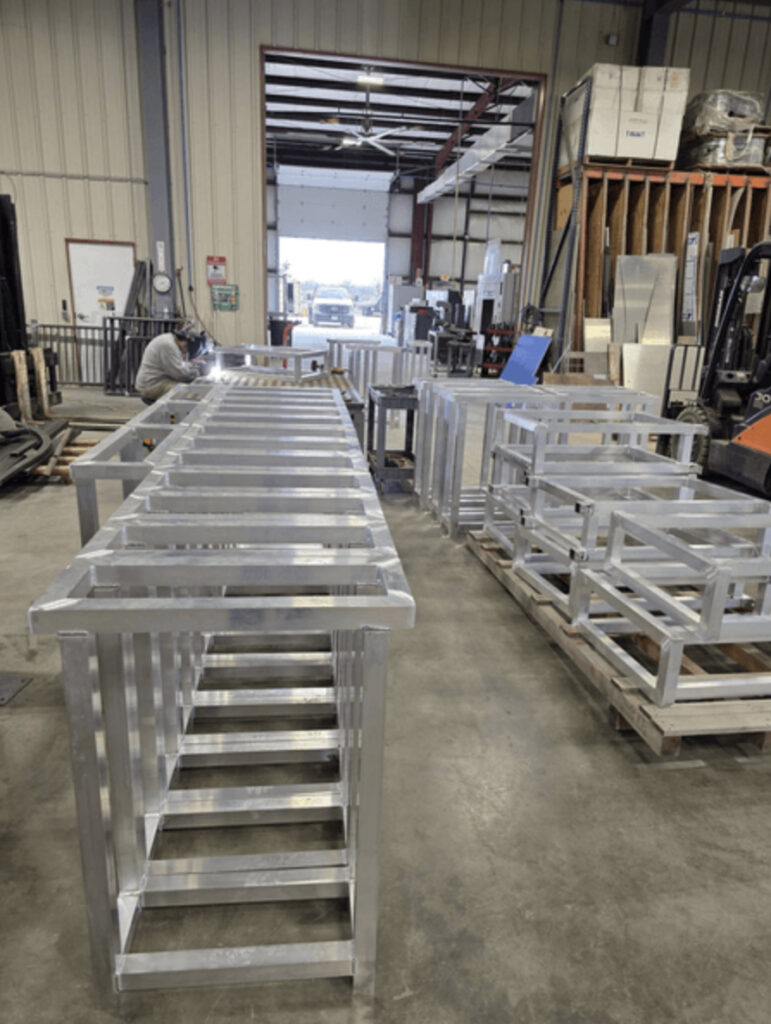
That is where a broader set of in-house capabilities becomes valuable. JAG Custom Fabrication offers waterjet cutting, high-definition plasma, fiber laser cutting, CNC routing, shearing, and multi-stack band saw cutting as part of its custom metal fabrication capabilities, giving industrial clients more flexibility in how parts are produced and prepared for the next stage of the job.
Need custom metal fabrication for an industrial project?
Request a quote or schedule a consultation to discuss your material, part requirements, and production needs.